Skip to content
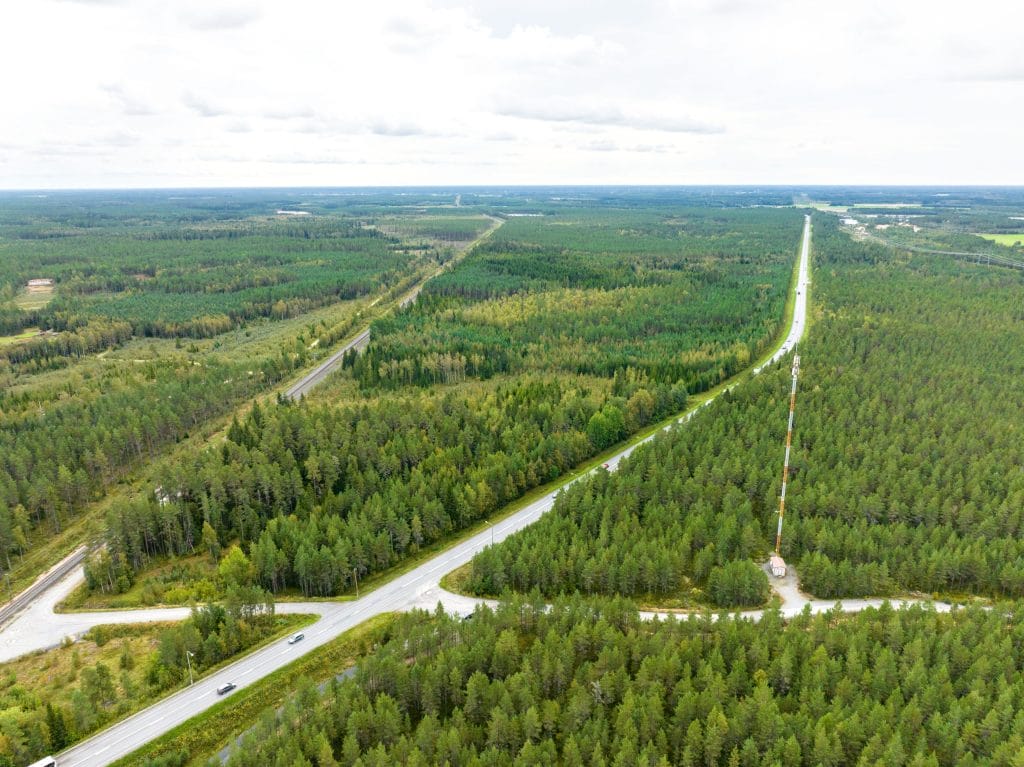
ilmakuva kruunuportin alueesta

Frequently asked questions about the Arctial project

Arctial is planning a low-carbon primary aluminium production facility in the Kruunuportti industrial area on the border between Kokkola and Kronoby. If realised, the project would have significant impacts on local businesses, employment, infrastructure, transport and services.

At present, however, the project is still in the planning stage. No final investment decision has been made regarding the construction of the plant. Arctial aims to make a final investment decision in 2027.

arctial.com

Frequently asked questions about the project

  • Arctial is planning a low-carbon primary aluminium production facility in the Kruunuportti industrial area on the border between Kokkola and Kronoby. The Arctial project is backed by an international industrial partnership comprising ABB, Fortum, Mitsubishi Corporation, Rio Tinto, Siemens Financial Services, Finnish Industry Investment (Tesi) and Vargas. These companies are financing the Arctial project company and the project’s planning and assessment work, while also contributing industrial, technological, energy sector and financial expertise.

    The plans include aluminium production through electrolysis, a foundry, and further processing of aluminium in a rolling mill. The Environmental Impact Assessment (EIA) has also examined an alternative in which the anodes required for production would be manufactured on site.

    The project’s currently planned production capacity is approximately 610,000 tonnes of aluminium per year. The project area covers approximately 170 hectares, of which 119 hectares are located in Kokkola.
  • No. Arctial has completed the project’s pre-feasibility phase and is continuing detailed technical, commercial and financial planning. The Environmental Impact Assessment (EIA) process has progressed to the report stage.

    A final investment decision has not yet been made. Arctial has stated that it aims to make the final investment decision in 2027.

  • The planned plant would be located in the Kruunuportti industrial area on the border between Kokkola and Kronoby, approximately five kilometres from the centre of Kokkola.

  • Arctial has identified the area as a strategically suitable location for low-carbon aluminium production. Key advantages include the existing industrial ecosystem, electricity infrastructure, the Port of Kokkola, transport and logistics connections, and the region’s industrial expertise and skilled workforce.

  • According to a Ramboll estimate commissioned by Arctial, the project’s total investment would amount to approximately EUR 4.7 billion. At this stage, this figure is an estimate and may change as the planning process progresses. The final size of the investment will depend on, among other factors, the project’s final design, technical solutions and the final investment decision.

  • According to a Ramboll assessment of the economic impacts of the Arctial project, the plant is expected to generate approximately 1,200 direct person-years of employment annually during the operational phase. Including indirect employment effects, the total employment impact is estimated at approximately 8,500 person-years per year. The construction phase is estimated to generate nearly 30,000 person-years of employment across Finland. (Economic Impact Assessment)

  • The operation of the plant would require a wide range of industrial skills and expertise. Employment opportunities could arise in areas such as production, maintenance, electrical and automation engineering, quality control, laboratory services, logistics, security, IT services and administration. In addition, the plant would create demand for a variety of subcontractors and service providers, generating further employment opportunities in the region.

  • A major industrial investment would have wide-ranging effects beyond the plant site itself. The project could create new business opportunities in sectors such as construction, maintenance, transportation, logistics, the machinery and metals industries, design, consulting, security services and other business services.

  • If realised, the project would represent a highly significant industrial investment for the Kokkola region and for Finland as a whole. According to Ramboll’s assessment, the project would have substantial impacts on employment, turnover and tax revenue. Once operational, the project is estimated to have a total impact equivalent to approximately 0.7% of Finland’s gross domestic product (GDP) and generate total annual tax impacts of more than EUR 600 million. (Economic Impact Assessment)

  • If the plant is realised, it would increase demand for labour in the region and could therefore also influence population growth. At this stage, however, it is difficult to estimate the scale of the impact precisely. It will depend, among other factors, on how many workers can be recruited from the existing workforce in Kokkola and the surrounding area, and how many new workers would relocate to the region from elsewhere in Finland or abroad.

    From the City’s perspective, this means preparing for potential growth in the demand for housing, services and labour.

  • A major industrial investment would likely increase demand for housing in the region. However, the extent of housing demand would depend on a number of factors, including the project’s final workforce size, where employees are recruited from, and how many new workers choose to relocate to the Kokkola region.

    The City of Kokkola is monitoring the progress of the project and assessing its potential impacts on housing as part of its urban planning.

  • If the project leads to a significant number of new employees and their families relocating to the area, it could increase demand for daycare and school services.

    The scale of any impact will depend on the number of people moving to the area, the composition of their households, and where new residents choose to settle. The City will take any potential impacts into account when planning its service network as more detailed information becomes available about the project’s development and workforce requirements.

  • Yes. If realised, the project would increase traffic in the Kokkola area.

    Traffic volumes would be affected by factors such as the transportation of raw materials, shipments of finished products and employee commuting. The project’s Environmental Impact Assessment (EIA) has examined traffic impacts during both the construction and operational phases. (Environmental Impact Assessment)

  • Primary aluminium production is highly electricity-intensive. The plant would therefore require substantial grid capacity.

    As part of the Environmental Impact Assessment (EIA) process, two new 400 kV transmission line connections from the Hirvisuo substation have been planned for the project. Arctial has also signed a letter of intent with Fingrid regarding the project’s grid connection.

    The project’s final electricity arrangements will be further defined as planning progresses. (Environmental Impact Assessment)

  • No. The plant would not take electricity directly away from other users. However, an aluminium plant would be a very large consumer of electricity and would increase Finland’s overall demand for electricity.

    The electricity required for the project is intended to be procured through the market and through long-term power purchase and hedging arrangements. Arctial’s energy partner, Fortum, supports the project in matters related to electricity procurement and long-term hedging strategies. In addition, Arctial has signed a letter of intent with Fingrid to secure a connection to the national transmission grid. According to the Environmental Impact Assessment (EIA) report, two new 400 kV transmission line connections from the Hirvisuo substation are planned for the project.

    Electricity supply and grid capacity are being assessed as part of the project planning process and within the broader context of the electricity system. (Environmental Impact Assessment and Fortum press release)

  • The project’s goal is to produce primary aluminium with significantly lower carbon dioxide emissions than the current European average.

    According to Arctial, the planned facility would utilise Rio Tinto’s AP60 technology and low-carbon electricity. Arctial estimates that the carbon footprint of the planned production could be approximately 40% of the current European average and about one quarter of the global average.

    However, the actual emissions level would depend on the final technical solutions selected for the project and on the project’s energy supply arrangements. (Project Arctial)

  • Even low-carbon aluminium production involves environmental impacts and emissions.

    As part of the project’s Environmental Impact Assessment (EIA) process, potential impacts on air quality, air emissions, noise, water resources, nature, traffic and people’s living environment have been assessed. The assessment has included, among other studies, air dispersion modelling, noise modelling and a Natura assessment. (Environmental Impact Assessment)

  • The project may affect the living environment of nearby residents through factors such as increased traffic, noise, changes in air quality and changes to the landscape.

    These potential impacts have been assessed as part of the project’s Environmental Impact Assessment (EIA) process. The purpose of the EIA process is to provide information on the project’s impacts and their significance before any subsequent permit decisions are made. (Environmental Impact Assessment)

  • Primary aluminium production involves the use of fluoride compounds, and potential fluoride emissions have therefore been assessed as part of the project’s Environmental Impact Assessment (EIA) process.

    The dispersion of emissions and their potential impacts have been evaluated as part of the EIA process. Environmental protection measures and emission limits will be determined during subsequent permitting procedures in accordance with applicable legislation and permit conditions.

  • The project may affect agriculture and forestry through factors such as changes in land use, increased traffic and potential environmental impacts.

    These impacts have been examined as part of the Environmental Impact Assessment (EIA) process. Any impacts will depend on factors such as the project’s final design, its emissions and their dispersion, as well as future land use in the area.

  • Potential impacts related to water use, water bodies and water quality have been assessed as part of the project’s Environmental Impact Assessment (EIA) process.

    The EIA report includes, among other things, a separate water balance assessment and data on the current condition of surface waters in the area. This information is used to assess the project’s potential impacts and to identify any necessary environmental protection measures. (Environmental Impact Assessment)

  • Potential impacts on the Laajalahti Natura 2000 area have been assessed in a separate Natura assessment conducted as part of the project’s Environmental Impact Assessment (EIA) process.

    The Natura assessment has been included as an annex to the EIA report and examines the project’s potential effects on the conservation values and conservation objectives of the Natura area. (Natura Assessment)

  • The operation of the plant may generate industrial noise. Potential noise impacts have been assessed as part of the project’s Environmental Impact Assessment (EIA) process through a dedicated noise modelling study.

    Any noise impacts and the measures required to mitigate them will be determined during the project’s further planning and in subsequent permitting and regulatory processes. (Noise Modelling Report)

  • Yes. A large industrial facility would alter the current landscape of the Kruunuportti area.

    The project’s Environmental Impact Assessment (EIA) process also examines its potential effects on the landscape and people’s living environment. The final placement of buildings, structures and other production-related facilities will be further refined as planning progresses.

  • The construction of an industrial-scale aluminium plant would require a number of regulatory procedures and permits.

    The Environmental Impact Assessment (EIA) process evaluates the project’s environmental impacts, but the EIA itself does not constitute a construction permit or an environmental permit. Even after a possible investment decision, the project would still require a range of permits and regulatory decisions, depending on its final scope and design.

  • Yes, they can.

    The Environmental Impact Assessment (EIA) process includes opportunities for residents, organisations and public authorities to express their views on the project. Following the EIA process, the project would proceed to the necessary permitting and regulatory procedures. A key part of this is the environmental permitting process, during which affected parties and other residents have the opportunity to submit comments and objections while the permit application is available for public review.

    Other permits and consultation procedures related to the project also provide opportunities for public participation. Information about these opportunities will be communicated as the project progresses.

  • The City is involved in the project from the perspectives of regional development, land use, infrastructure and economic development.

    However, the City does not decide on whether the plant will be built. The project can only proceed if Arctial makes a positive investment decision and if the necessary permits, regulatory approvals, energy solutions and other requirements are secured.

    The City’s role is to ensure that the project’s opportunities and impacts are identified from Kokkola’s perspective and that the City is prepared for any changes the project may bring.

  • According to Arctial’s current plans, the aim is to make a final investment decision in 2027.

    Before that decision is made, the project’s technical, commercial, economic and environmental feasibility will continue to be assessed. As a result, the project’s final scope, schedule and technical solutions may still change. (Arctial’s press release)

More information: